

In order to heal, you must feel
You look fine. You function. You show up, hold it together, answer everyone’s needs before your own.
But your shoulders live up by your ears. You go to bed tired and wired. Your body braces before you’ve even decided to be afraid – and somewhere underneath the doing, there’s a stillness you can’t quite reach.
Every feeling you’ve ignored has lodged in your body as tension. Every emotion unexpressed has locked in as pain. Every self-defeating thought has registered in your system and shows up now as stress, anxiety, or a heaviness you can’t explain.
That isn’t weakness, and it isn’t weak faith. It’s a body that never had an empathetic witness. This journey gives you one.

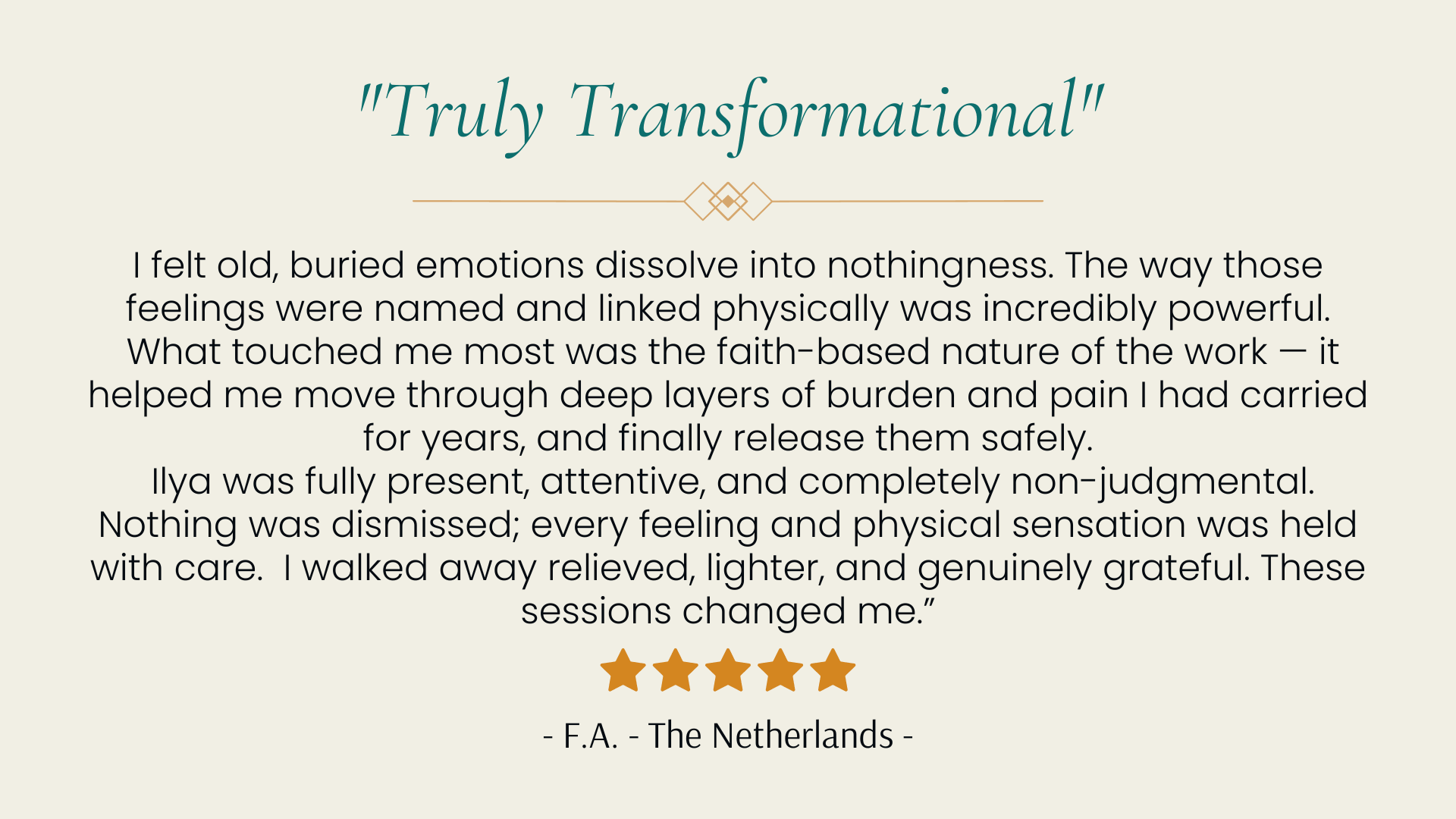
“I felt old, buried emotions dissolve into nothingness… these sessions changed me.”
– F.A. – The Netherlands
Science meets soul
That breath you take 25,000 times a day but are hardly ever aware of – it’s not just keeping you alive. It’s a healing instrument. Allah designed the breath as a bridge between what your mind can’t switch off and what your body won’t let go of.
What this is
● A deep-dive healing journey into your subconscious through the power of conscious connected breathing – with the Help of Allah ‘Azza wa Jal
● A curated soundscape of nature sounds, nasheed, and drums – no conventional music
● Somatic release: letting your body process what your mind has tried to move past
● Private, 1-on-1, guided by your empathetic witness – sister to sister
What this isn’t
— Therapy, diagnosis, or medical advice
— Trauma dumping or reliving the hard story in words
— A hype session, or “just breathe and be grateful”
— Spiritual bypassing dressed up as healing
— Conventional breathwork with generic playlists – every journey is crafted with intention

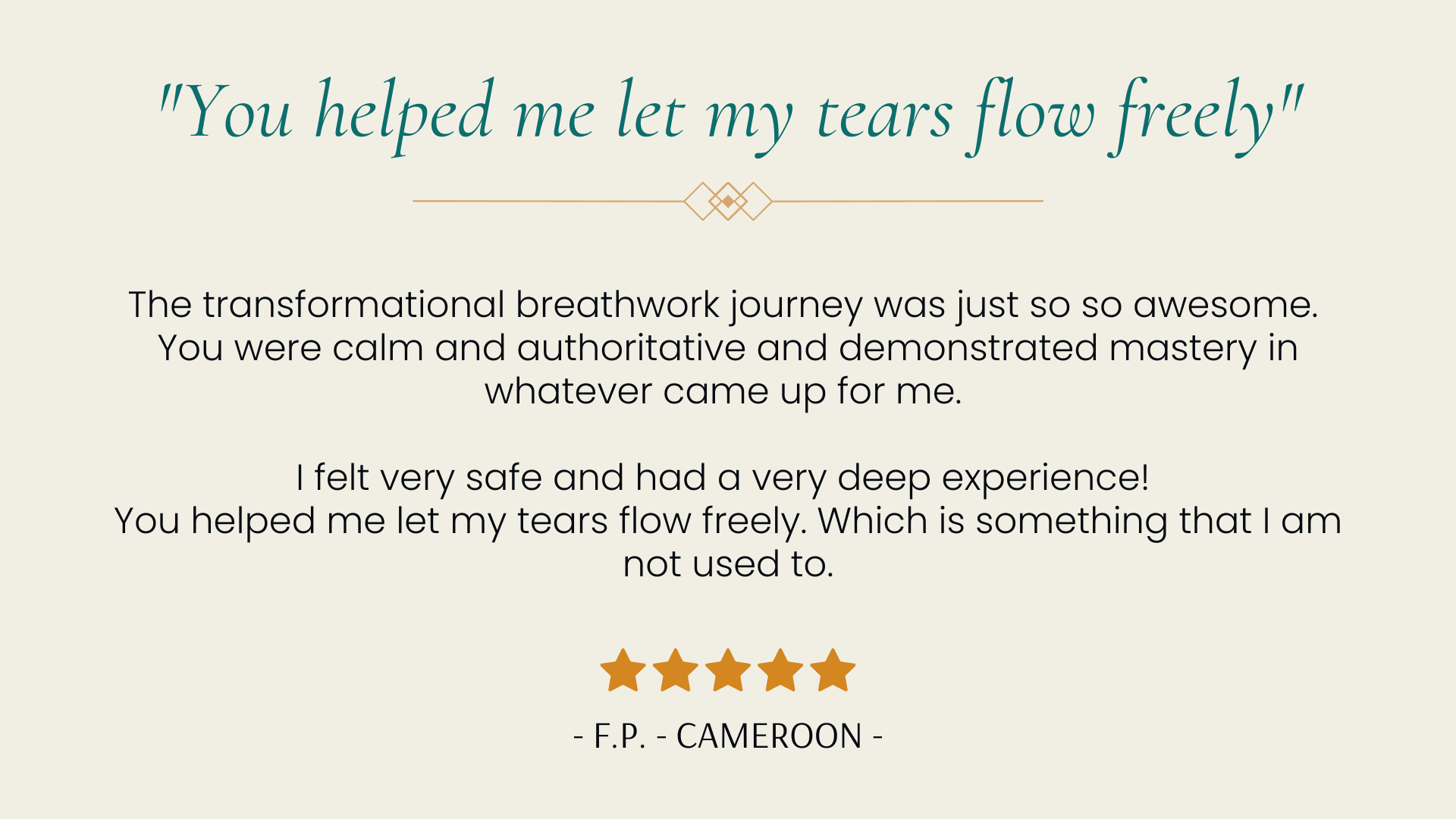
“I felt very safe and had a very deep experience. You helped me let my tears flow freely – which is something I am not used to.”
– F.P. – Cameroon
What to expect in your body
The gas exchange triggered by deep connected breathing creates real physical and emotional responses. Knowing what may happen helps you stay with it instead of pulling away. This is all normal – and none of it is dangerous.
Physically
Tingling in your hands, face, or body. Tetany (temporary tightness, sometimes called “lobster claws” – it passes, you won’t be stuck). You might feel dizzy or light-headed – you’re lying down, you’ll be fine. You might forget to breathe for a moment – just come back when you notice. All of this is the breath doing its work.
Emotionally
Emotions may come up – and you want them to. Tears, laughter, both at once. If they don’t surface, it doesn’t mean nothing is happening. But if they do: don’t push them down. Emotion is energy in motion – it’s supposed to move through you. Live through it and you let it go. Suppress it and it gets stuck. Whatever comes up is okay. You are safe. In order to heal, you must feel.
Mentally
Your inner critic may try to distract you – tell you it’s too much, tell you to slow down, tell you you’re doing it wrong. That’s the nafs fighting for the steering wheel. Quiet the mind and breathe. When transient hypofrontality sets in, the prefrontal cortex – the home of the monkey mind – quiets down, and your body can do its deeper work. Trust the process.
You are the captain of your vessel. The depth and speed with which you breathe are always up to you. Depth goes over speed. Bi Idhnillah.
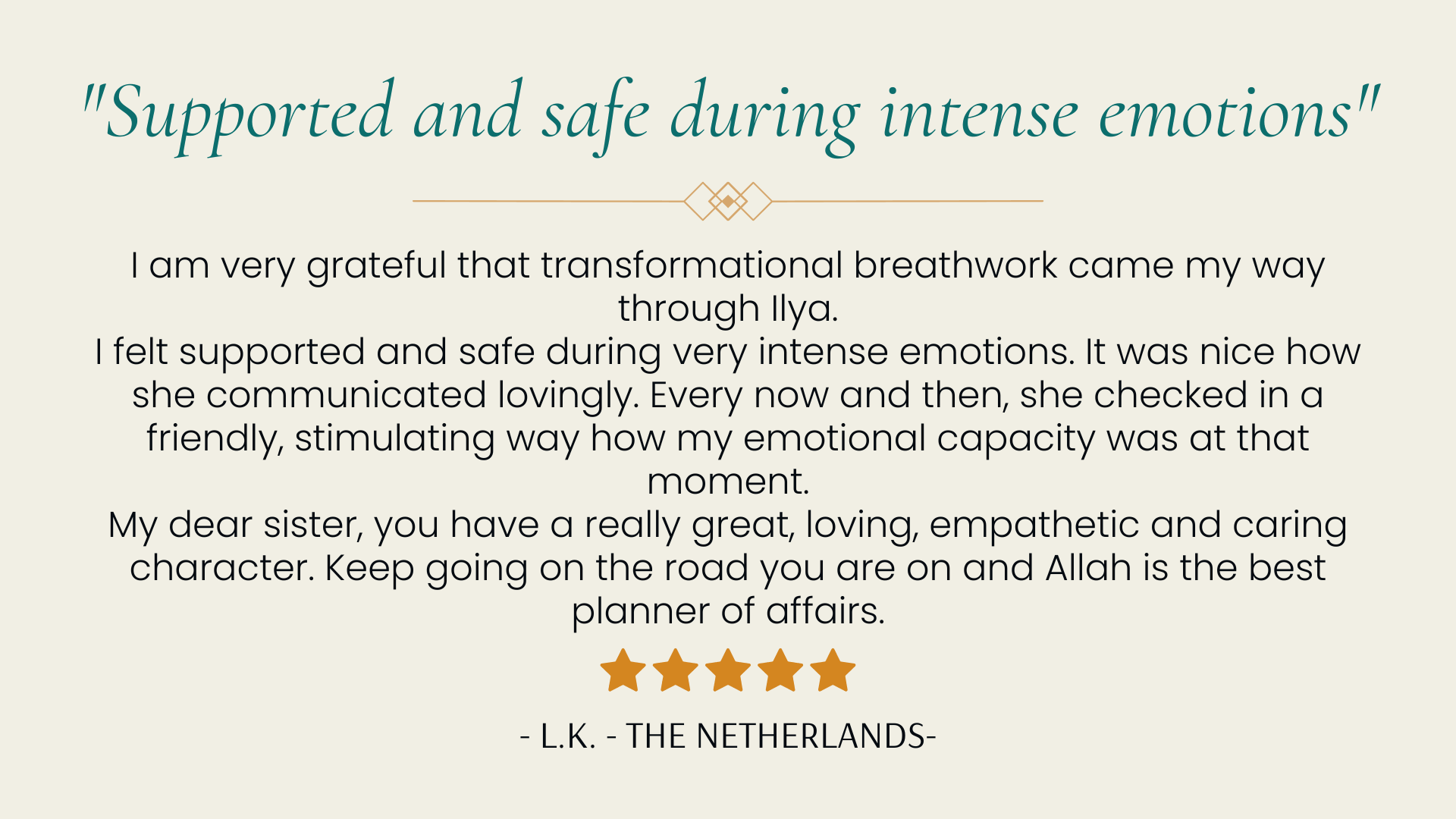
“I felt supported and safe during very intense emotions. She communicated lovingly. Every now and then, she checked in a friendly, stimulating way how my emotional capacity was at that moment.”
– L.K. – The Netherlands

“What touched me most was the faith-based nature of the work – it helped me move through deep layers of burden and pain I had carried for years, and finally release them safely.”
– F.A. – The Netherlands



Take it slow
Breathwork is a powerful healing modality, and part of being trauma-informed is being honest about when to modify or wait. If any of the following apply to you, please tell me before we book – we adapt the practice, or choose a gentler starting point. Your safety comes before the session.
If at any time during the journey you need to slow down, you do. A reset breath – slow and low through the nose – is always there. You are in full control of your breathing. I can’t jump through the screen and breathe for you.
This session is somatic coaching and support – not a substitute for medical, psychiatric, or crisis care. If you’re in danger or crisis, please reach out to local professional support.
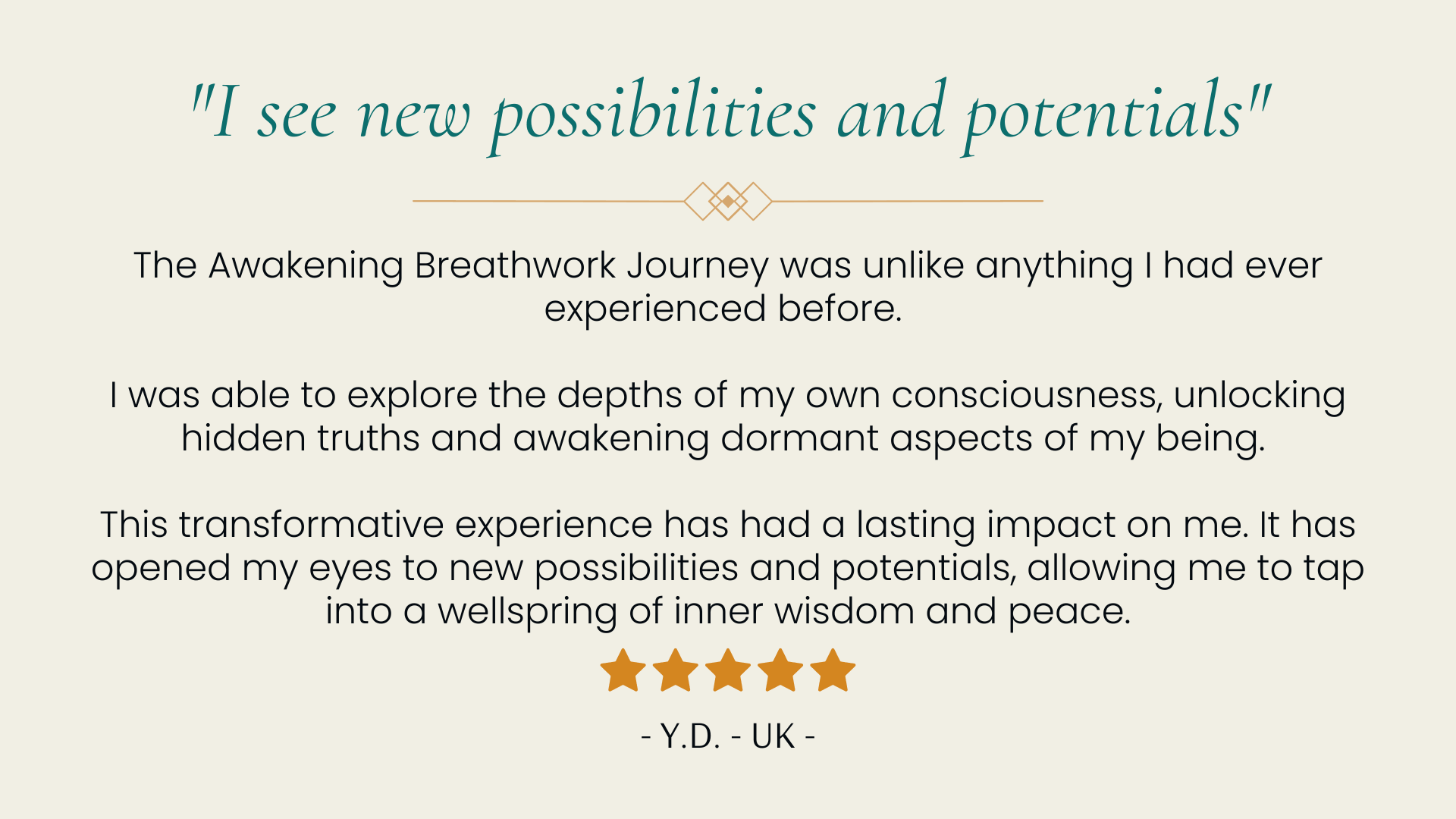
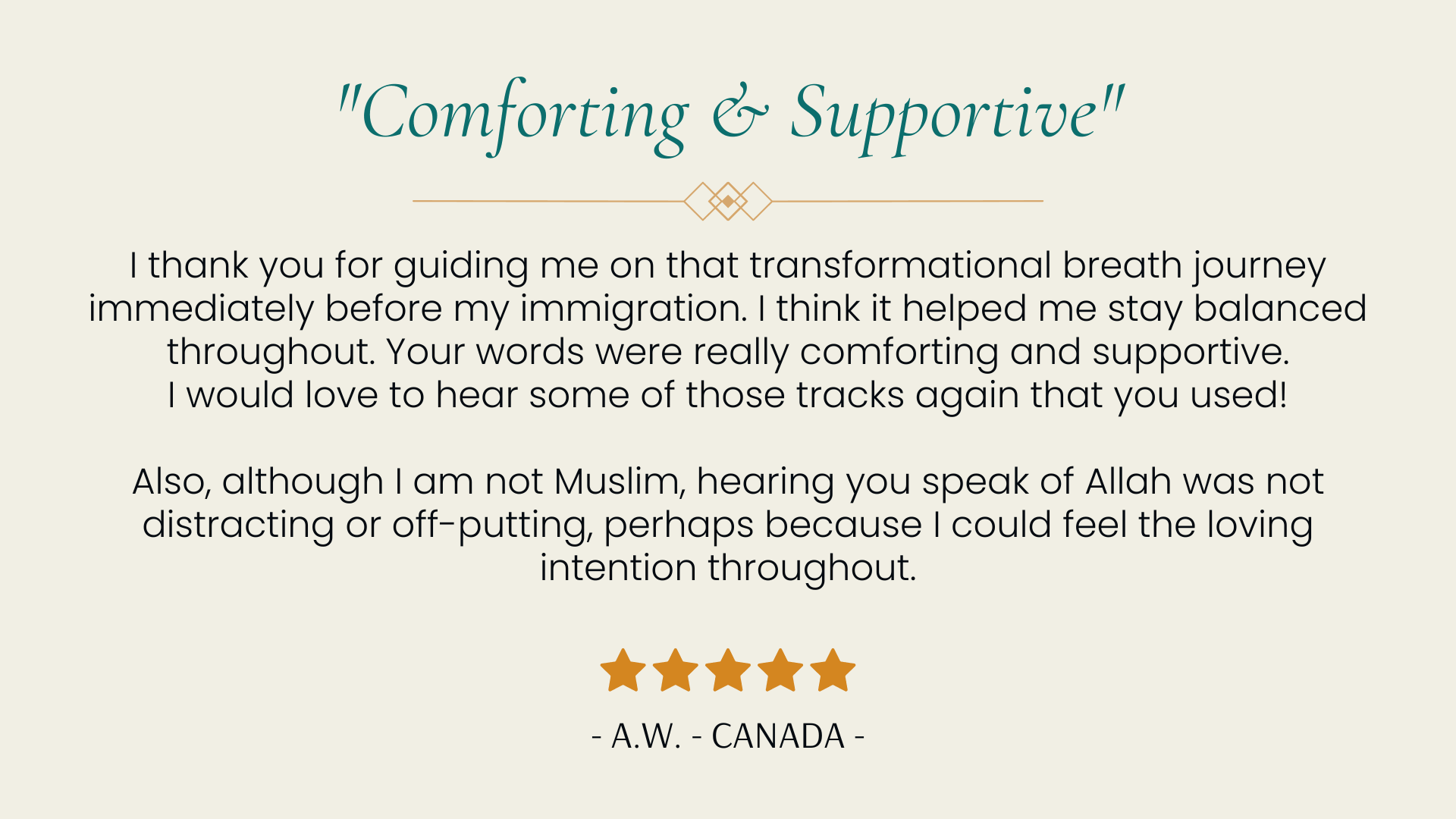
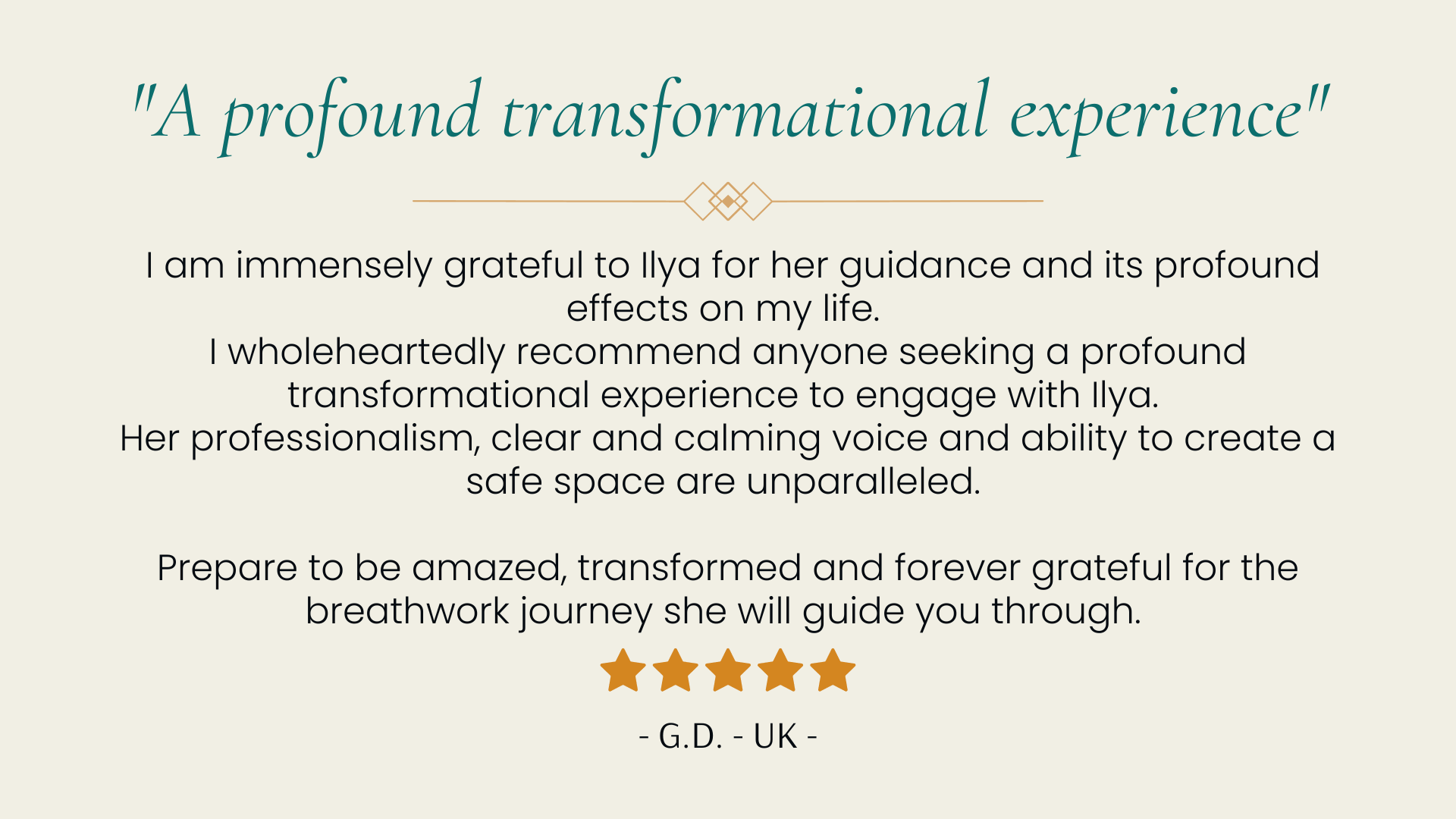
“Her professionalism, clear and calming voice and ability to create a safe space are unparalleled. Prepare to be amazed, transformed and forever grateful.”
– G.D. – UK
Ready to breathe?
Two small confirmations, then your booking opens. This protects you – and it’s how we begin honestly.
Before you journey
Is this halal? Does it fit with my deen?
Yes. The breath is not borrowed from anywhere – it’s how Allah designed your body. The soundscape uses nasheed, nature sounds, and drums only – no conventional music. The wordings and phrases are rooted in Quran and Sunnah. There is no chanting, no foreign spirituality, no bypassing your faith. This is conscious breathing held inside an Islamic understanding of the self. As the Prophet (sallallahu ‘aleyhi wassallam) showed us: he expressed his emotions, he cried, he voiced his feelings. So he shows us – it IS okay.
What does the breathing actually do? Why does it work?
Deep connected breathing changes the gas exchange in your body, which shifts your nervous system state. When you breathe intensely and continuously for about 45 minutes, you reach a state called transient hypofrontality – your prefrontal cortex (the home of the inner critic, the nafs, the overthinking) quiets down. This opens a door to your subconscious mind. Without saying a single word, your body can access and release what’s been stored – tension, emotion, old beliefs that trauma wrote into your system. The body never forgets. But it can let go, when given the right conditions.
Do I need any experience?
None. You don’t need to be “good at” breathing or meditation. I’ll teach you the technique before we start and explain exactly what to expect. You bring your body as it is. I guide the rest.
What if I get very emotional?
That’s specifically invited, not a problem. Emotions are energy in motion – they’re supposed to move through you. If you cry, shake, move, laugh – do it. Don’t push it down. Pushing it down stops your own healing. Whatever comes up is okay. You are safe. You won’t be handled. You’ll be held.
What if it gets too intense?
You are the captain of your vessel. If you need to slow down, close your mouth and take a few deep breaths in and out through your nose. That’s your reset breath and it’s always there. You are in full control of your journey. But I’ll also say this: the first 15 minutes are the hardest. If you push through that storm, you come out on the other side. You have a 100% survival rate of everything you’ve faced in your life so far. You can do one hour.
What do I need for an online session?
A private, quiet space where you won’t be interrupted. Somewhere to lie down comfortably – a yoga mat, bed, or carpet. Good headphones (important for the soundscape). A stable internet connection. An empty or light stomach – don’t eat heavily beforehand. And water nearby.
How long is a session?
Your first journey takes about 1.5 to 2 hours, because I walk you through the physiology, the technique, and what to expect before we start. From your second journey onward, we skip the explanation and go straight in – about 1 to 1.5 hours total. After the session, please keep at least an hour quiet to integrate. Don’t jump back to work or your phone. Let yourself land.
Is one session enough?
One journey can shift a tremendous amount – many sisters feel a deep release and relief after a single session. But the body stores layers, and some patterns need more than one journey. If you want to go deeper, this is also a powerful complement to the fuller coaching work. There’s no pressure. Start where you are.
How is this different from conventional breathwork?
Three things. First, the soundscape: no conventional music. Each journey is crafted with nasheed, nature sounds, and drums – sound that honours your faith and your nervous system. Second, the wordings: the guided script is rooted in Quran and Sunnah, connecting you to Allah and your fitrah throughout. Third, the space: this is 1-on-1, private, and held by someone who understands the specific weight a Muslim woman carries. You are not in a room of strangers. You are seen.